Project 03 , Security & systems
Mordhau — Runtime Memory Patching
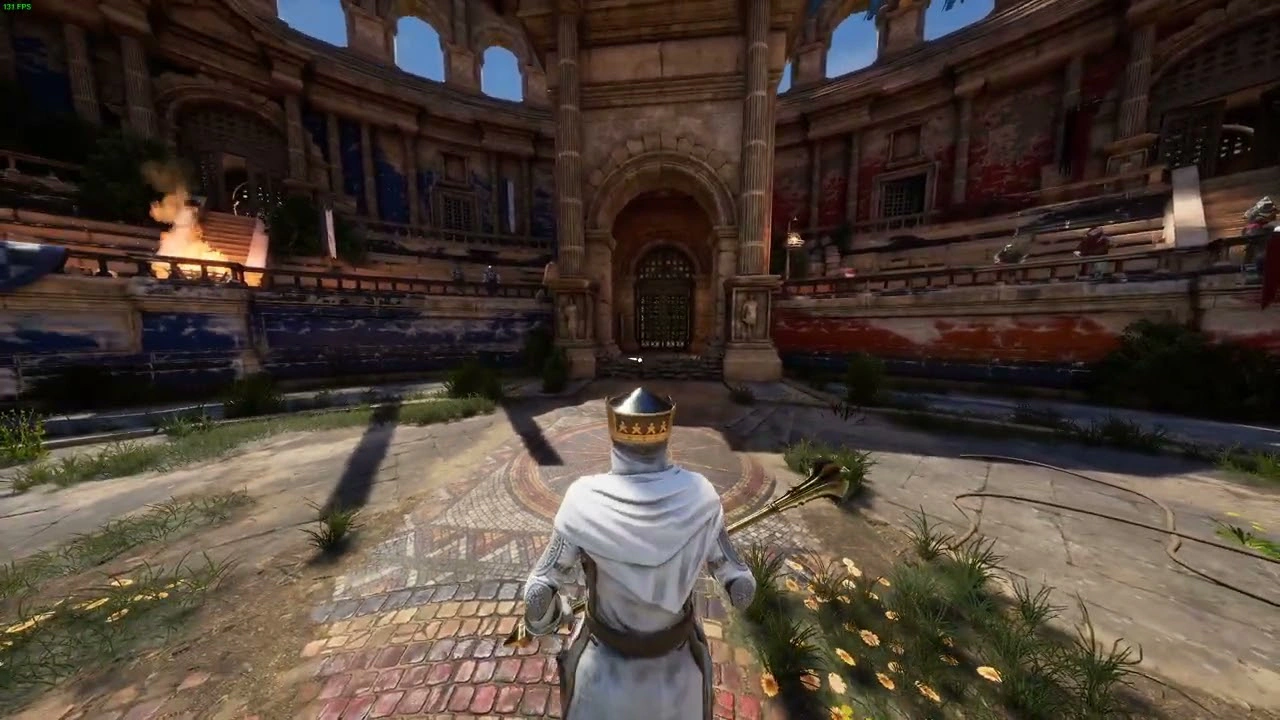
A C++ DLL injected into Mordhau's Unreal Engine 4 client that patches memory at runtime to change field-of-view, turn-rate, movement and cooldown limits.
TL;DR
A cheat I wrote in 2021 for the sword-fighting game Mordhau, and sold access to. It adds options the game does not offer, like a wider field of view and armour that was only sold before launch. I also handled the access keys, the menu and user support.
Key points
- Patched a live Unreal Engine 4 game's memory at runtime through an injected DLL.
- Shipped as two packages, Cosmetic and Gameplay; the Cosmetic package was the most popular.
- Exposed in-game controls for field of view, turn-rate caps, crouch and dodge cooldowns, warm-up movement, and idle-kick prevention.
- Built user authorization plus access-key distribution and management around the tool.
- Handled the tool's UX and end-user tech support, working from client feedback.
Problem
Mordhau’s stock client leaves out options players wanted — including a wider field of view, which proved very popular with users.
Approach
I reverse-engineered the running Unreal Engine 4 client, then wrote a C++ DLL that is injected into the game and patches its memory at runtime. Each change is exposed as a control in an in-game menu, so values can be adjusted while playing.
What I built
Memory patching through DLL injection. The core of the tool, running inside the live client.
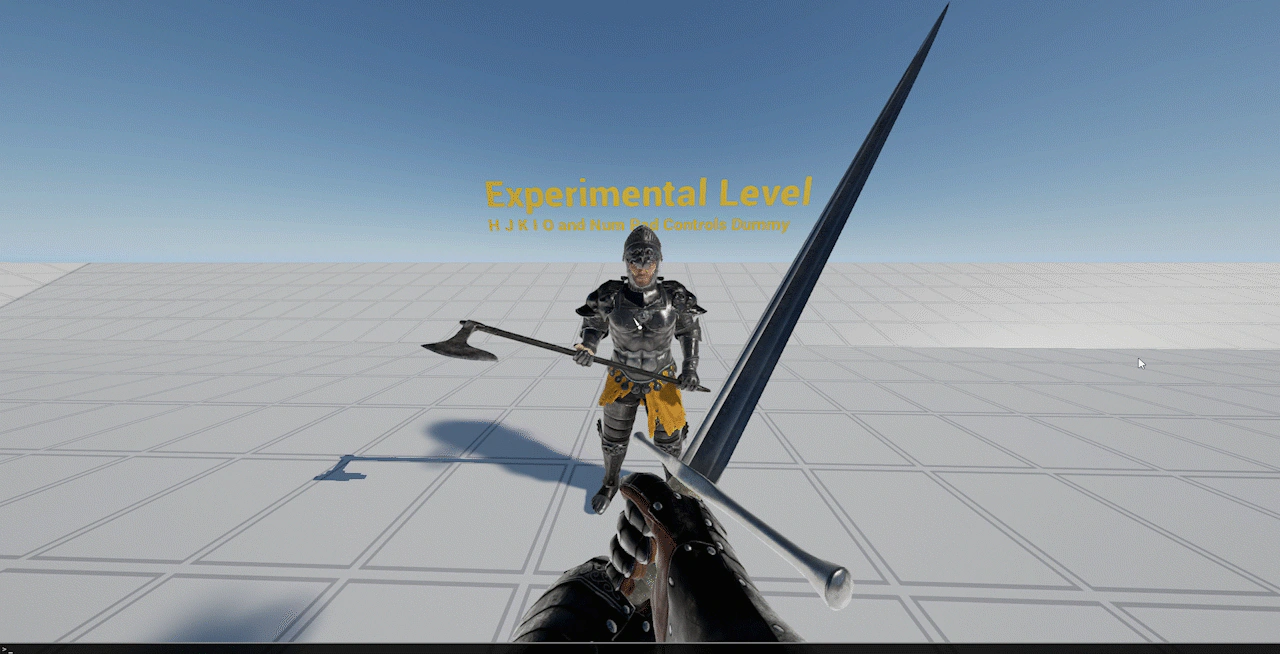
Gameplay package
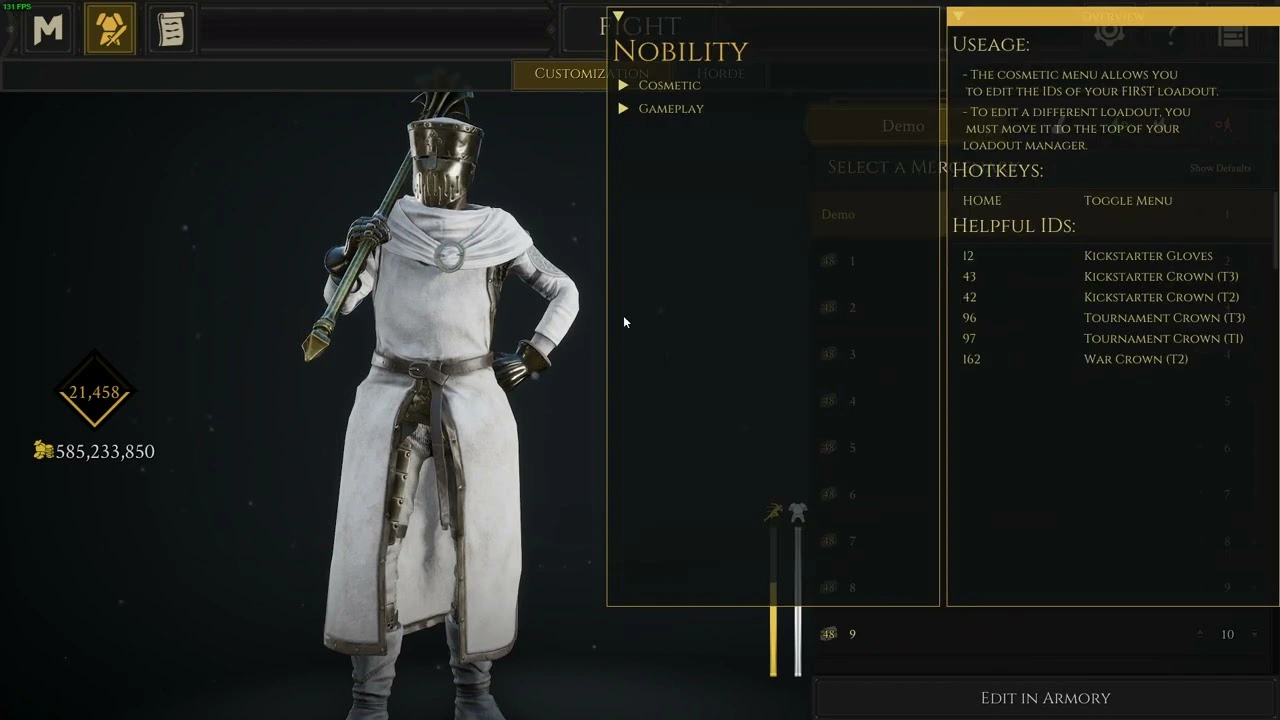
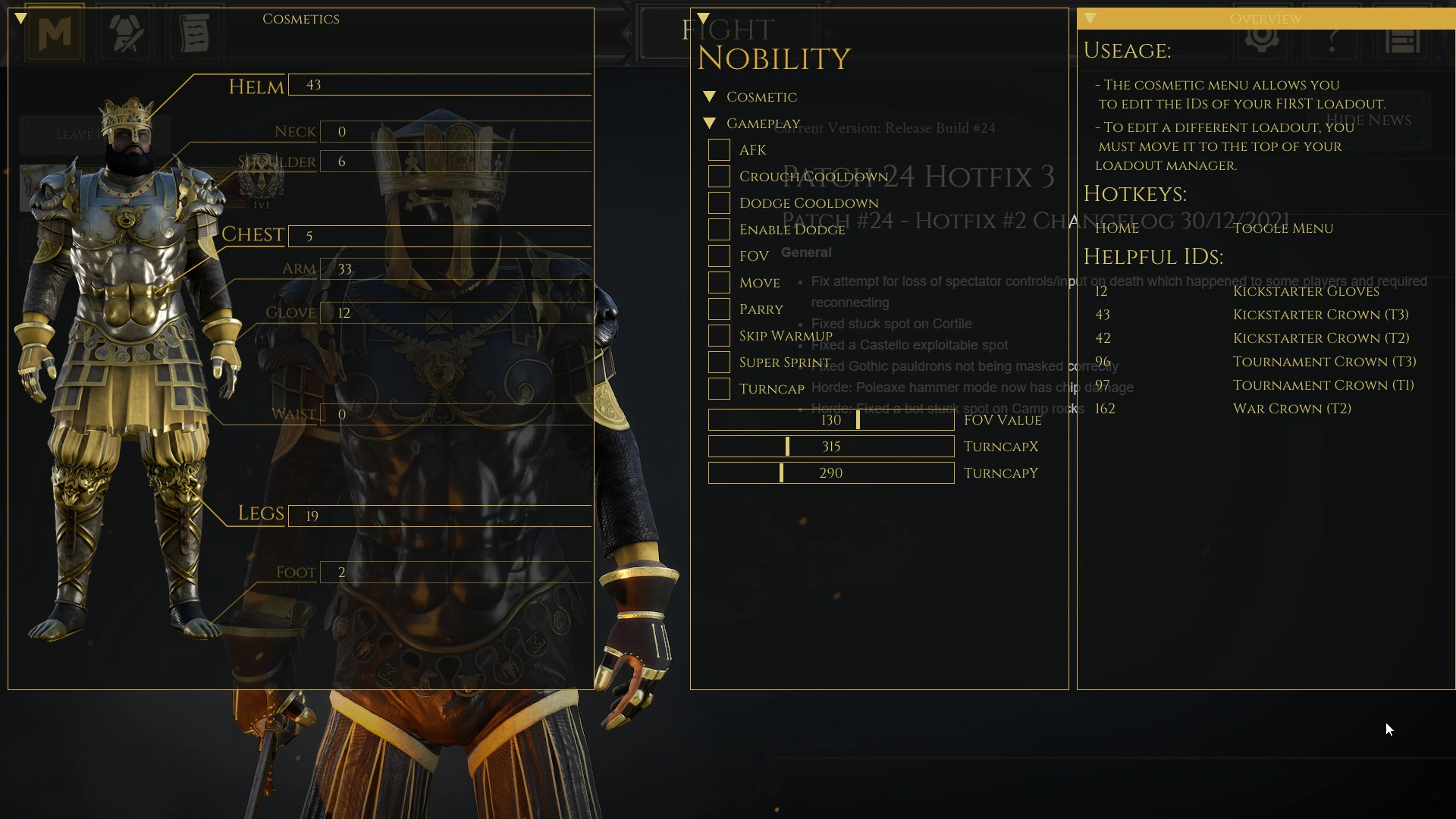
Ten toggles: field of view; the turn restrictions applied during combat (TurncapX and TurncapY); instant crouch and dodge; dodge for the current class; movement while emoting; movement during the match-start warm-up; faster sprint; automatic parry; and protection from being kicked for inactivity.
Cosmetic package
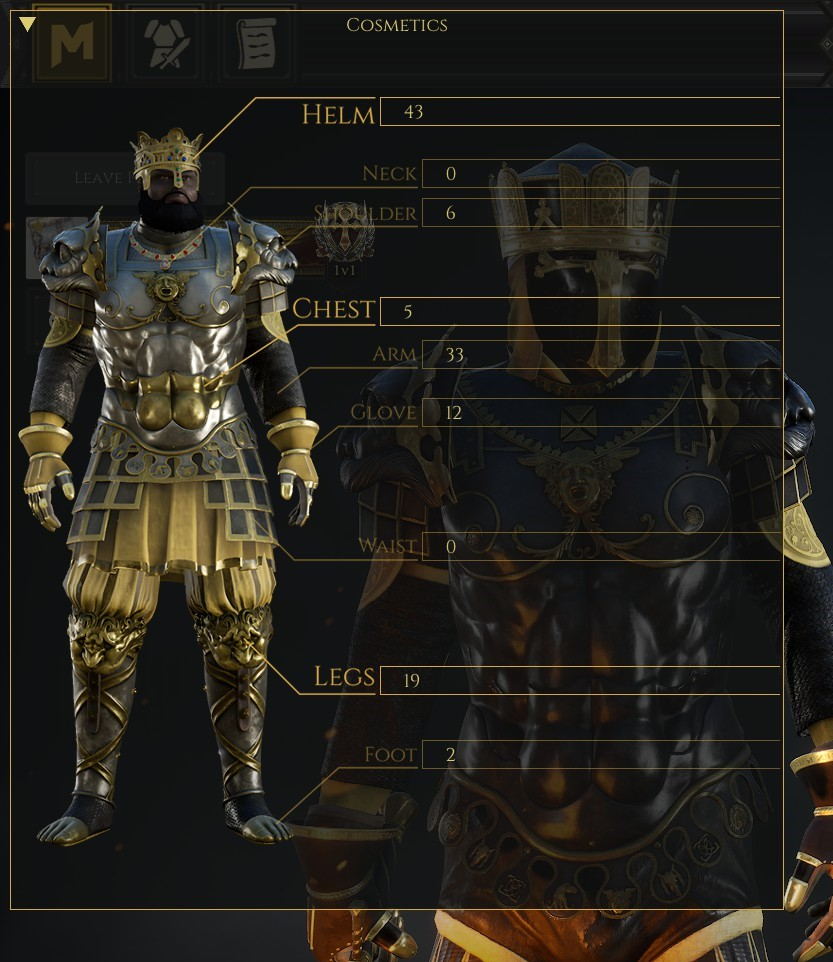
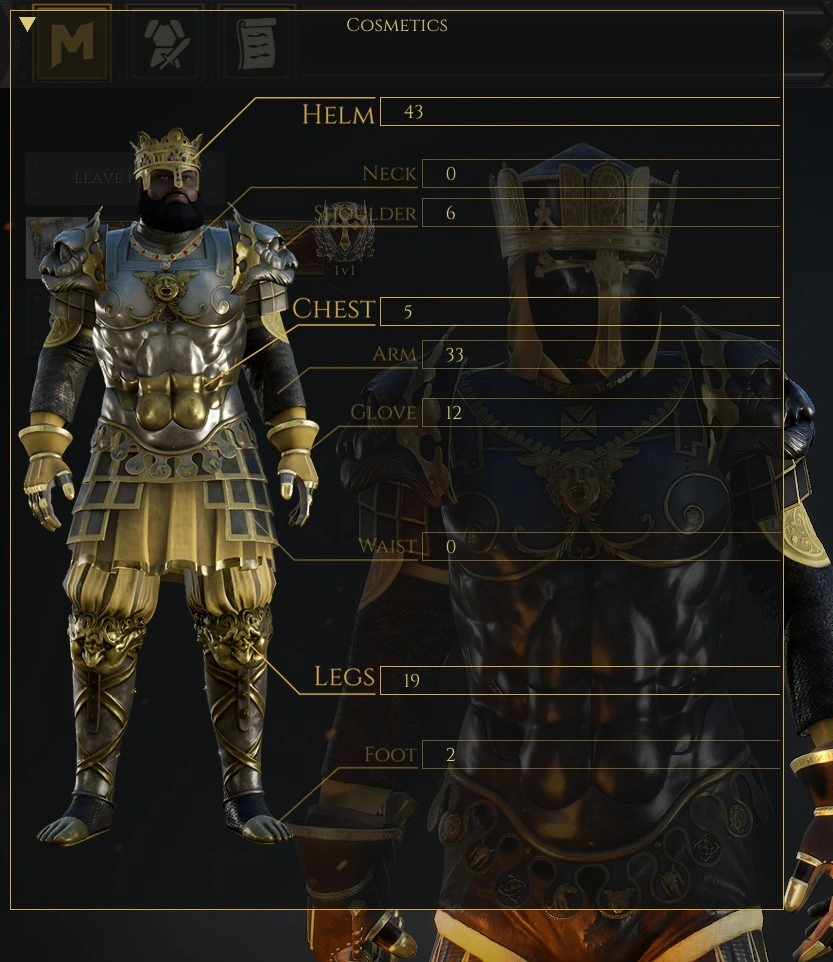
An in-game panel for setting the armour ID of each slot, which let users wear Kickstarter-only cosmetics. It was the more popular of the two.
Access control and support
- Access control. User authorization, plus distribution and management of access keys.
- Support. The tool’s UX, and tech support for its users.
Outcome & lessons
Releasing the tool to real users stretched the project well past the reverse engineering: authorization, key management, UX, tech support and client feedback all became part of the work.